Woolen Craft

Handmade Woolen Décor & Accessories for Modern Homes. Crafted with love. Designed for warmth.

“Handcrafted Woolen Wonders for Everyday Joy.”

Home » Archives for July 2026

July 2026

Best Yarn for Handmade Sling Bags:

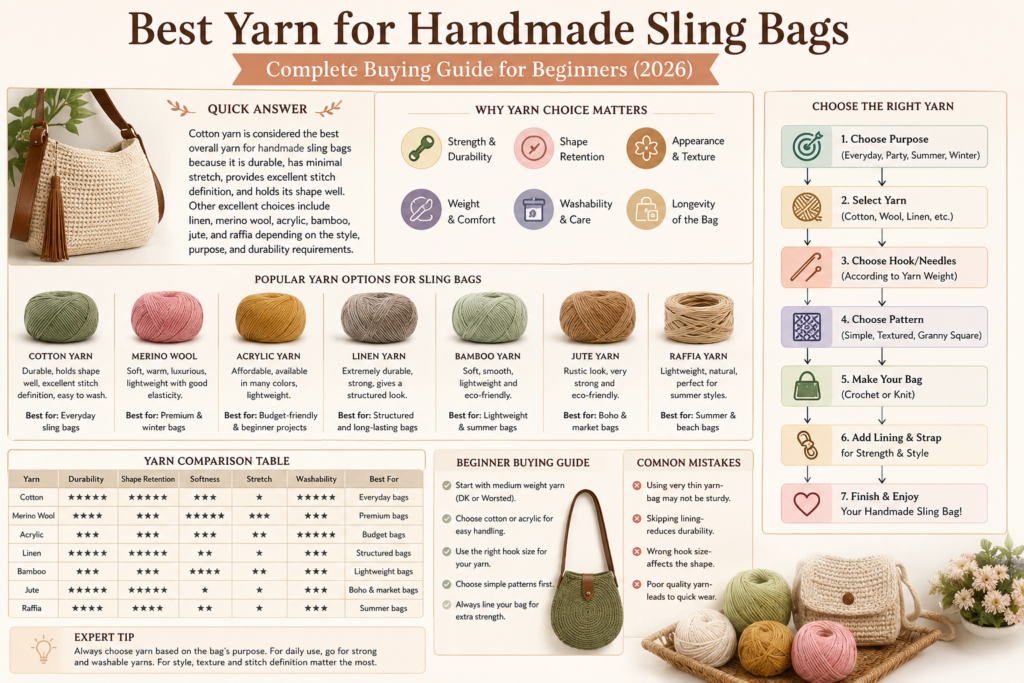
What is the best yarn for handmade sling bags? The best yarn for handmade sling bags depends on how the bag will be used. For most handmade sling bags, cotton yarn is considered the best overall choice because it is durable, holds its shape well, provides excellent stitch definition, and is easy to maintain. Other excellent options include linen yarn, merino wool, acrylic yarn, bamboo yarn, jute, and raffia, each offering different benefits depending on the bag style and purpose. What Is the Best Yarn for Handmade Sling Bags? The best yarn for handmade sling bags is one that provides: Durability Shape retention Strength Attractive texture Easy maintenance Because bags carry weight and experience daily wear, they require stronger yarn than garments such as sweaters or scarves. Best Yarn Choices by Purpose Purpose Best Yarn Everyday Sling Bag Cotton Yarn Premium Handmade Bag Merino Wool Structured Bag Linen Yarn Summer Bag Raffia Yarn Eco-Friendly Bag Organic Cotton Budget-Friendly Bag Acrylic Yarn Rustic Boho Bag Jute Yarn Lightweight Bag Bamboo Yarn   Why Does Yarn Choice Matter? Many beginners focus only on the bag design. Experienced artisans know that yarn selection often determines whether a bag lasts for years or loses its shape after a few months. Direct Answer Yarn affects: Strength Durability Appearance Texture Weight Stretch Washability Longevity A beautiful pattern cannot compensate for poor yarn selection.   Why Do Handmade Bags Need Stronger Yarn Than Garments? Direct Answer Garments primarily provide warmth and comfort. Bags must support weight. When carrying: Mobile phones Wallets Books Cosmetics Water bottles The bag experiences constant stress. For this reason, stronger yarns such as cotton, linen, jute, and certain blends are often preferred.   Factors to Consider Before Choosing Yarn Before purchasing yarn, ask yourself these questions. 1. How Durable Should the Bag Be? If durability is your priority: Choose: Cotton Linen Jute Avoid: Lightweight lace yarns   2. Should the Bag Hold Its Shape? Some yarns stretch significantly. If you want a structured sling bag: Choose: Cotton Linen Raffia These materials maintain their shape better.   3. Is Softness Important? For softer bags: Choose: Merino Wool Alpaca Wool Bamboo Yarn   4. Will the Bag Be Used Daily? Daily-use bags require: High durability Easy cleaning Shape retention Cotton remains the most practical choice.   Natural Yarns for Handmade Sling Bags Natural fibers remain extremely popular among handmade artisans. Benefits of Natural Yarns Eco-friendly Biodegradable Breathable Comfortable to handle Often more durable Popular natural yarns include: Natural Yarn Popularity Cotton Very High Wool High Merino Wool High Alpaca Medium Linen High Bamboo Growing Jute High Raffia Growing   Is Cotton Yarn the Best Choice for Handmade Sling Bags? Direct Answer For most handmade sling bags, yes. Cotton is often considered the gold standard because it balances durability, appearance, affordability, and ease of use.   Why Is Cotton Yarn Popular for Crochet Bags? Cotton offers: Excellent stitch definition Minimal stretch Strong fibers Easy maintenance Professional appearance This makes it ideal for: Crochet sling bags Tote bags Crossbody bags Granny square bags   Does Cotton Yarn Hold the Shape of a Bag Well? Yes. Unlike wool or acrylic, cotton has limited elasticity. This helps prevent: Sagging Distortion Stretching Many professional bag makers specifically choose cotton because of its structure.   Cotton Yarn Pros and Cons Advantages Disadvantages Durable Slightly heavier Easy to wash Can feel stiff Excellent stitch definition Less stretchy Holds shape well May shrink if untreated Beginner-friendly Higher quality cotton costs more   What Is Merino Wool? Merino wool comes from Merino sheep and is considered one of the finest wool fibers available.   Is Merino Wool Good for Handmade Sling Bags? Direct Answer Yes, especially for premium handmade bags. Merino wool provides: Softness Luxury feel Elasticity Beautiful texture   Why Is Merino Wool Considered Premium? Merino wool is: Softer than regular wool Less itchy More comfortable Lightweight Naturally moisture resistant This makes it suitable for: Designer bags Gift bags Boutique products   Merino Wool Pros and Cons Advantages Disadvantages Luxurious texture More expensive Lightweight Requires care Soft May stretch Attractive appearance Less structured than cotton   What Is Alpaca Wool? Alpaca wool comes from alpacas and is known for its softness and warmth.   Can Alpaca Wool Be Used for Handmade Sling Bags? Yes. However, it is usually used for decorative or premium bags rather than heavy-duty everyday bags.   Benefits of Alpaca Wool Extremely soft Warm Lightweight Premium appearance   Alpaca Wool Pros and Cons Advantages Disadvantages Very soft Expensive Warm Less structured Luxurious Limited availability Lightweight May require lining   What Is Linen Yarn? Linen yarn is produced from flax fibers. It is one of the strongest natural fibers available.   Is Linen Stronger Than Cotton for Sling Bags? Direct Answer Yes. Linen generally provides: Higher tensile strength Better durability Greater structure   Why Do Artisans Use Linen Yarn? Because linen: Creates structured bags Ages beautifully Becomes softer over time Lasts for years   Linen Yarn Pros and Cons Advantages Disadvantages Extremely durable Can feel stiff initially Excellent structure Less stretchy Premium look More expensive Long-lasting Slight learning curve   What Is Bamboo Yarn? Bamboo yarn is produced from bamboo fibers and is becoming increasingly popular among eco-conscious crafters.   Is Bamboo Yarn Suitable for Handmade Sling Bags? Yes. Bamboo is ideal for lightweight sling bags and summer accessories.   Benefits of Bamboo Yarn Soft texture Lightweight Moisture wicking Sustainable source   Bamboo Yarn Pros and Cons Advantages Disadvantages Soft Less structured Lightweight Moderate durability Eco-friendly Can stretch Comfortable Often blended with other fibers   What Is Jute Yarn? Jute is a natural plant fiber known for its strength and rustic appearance.   Why Is Jute Used for Handmade Bags? Because it offers: Excellent durability Strong structure Natural aesthetic Sustainability Jute is especially popular for: Boho bags Market bags Rustic handmade bags   Jute Yarn Pros and Cons Advantages Disadvantages Very strong Rough texture Eco-friendly Less soft Excellent shape retention Limited colors Rustic appearance Not ideal for luxury bags  

Best Yarn for Handmade Sling Bags: Read More »
Handmade Woolen Crafts

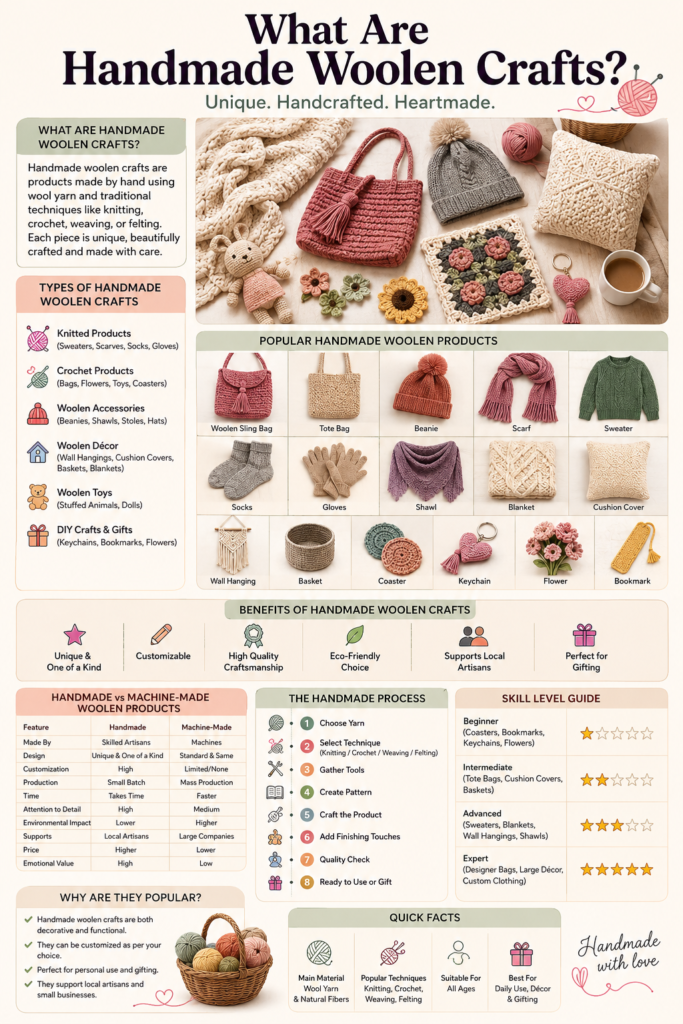
What Are Handmade Woolen Crafts? Handmade woolen crafts are items created by hand using wool yarn or other wool-based fibers instead of being mass-produced by machines. These crafts combine creativity, traditional techniques, and skilled craftsmanship to produce unique products for everyday use, home decoration, fashion, and gifting. Unlike factory-made products, every handmade woolen craft is individually designed and crafted. This means each item has its own character, texture, and finishing, making it one of a kind. People create handmade woolen crafts using techniques such as knitting, crochet, weaving, and felting. These methods allow artisans to transform yarn into beautiful and functional products like bags, scarves, blankets, home décor, and accessories. What Products Are Considered Handmade Woolen Crafts? Handmade woolen crafts include a wide range of decorative and functional items. Category Examples Fashion Accessories Beanies, scarves, gloves, shawls, socks Bags Woolen sling bags, tote bags, handbags, crossbody bags Home Décor Wall hangings, cushion covers, blankets, baskets Gifts Keychains, bookmarks, flowers, gift sets Toys Stuffed animals, dolls, soft toys DIY Crafts Crochet flowers, pom-poms, ornaments, coasters These products are made for personal use, gifting, home decoration, or everyday utility. How Are Handmade Woolen Crafts Made? Most handmade woolen crafts follow a simple process: Step Description 1 Select the appropriate wool yarn. 2 Choose the crafting technique (knitting, crochet, weaving, or felting). 3 Gather tools such as needles, hooks, scissors, and measuring tape. 4 Create the design by following a pattern or original idea. 5 Add finishing touches like lining, buttons, handles, or decorative elements. 6 Inspect the product for quality before use or sale. Although the process varies by project, every handmade item requires patience, skill, and attention to detail. What Types of Handmade Woolen Crafts Are Available? There are many types of handmade woolen crafts, each serving different purposes. Type Common Products Knitted Crafts Sweaters, scarves, socks, gloves Crochet Crafts Bags, flowers, toys, coasters Felt Crafts Decorative items, ornaments, keychains Woven Crafts Rugs, wall hangings, baskets Decorative Crafts Cushion covers, home décor, festive decorations Why Are Handmade Woolen Crafts Unique? Handmade woolen crafts stand out because they are created individually rather than produced in large quantities. Some of the reasons include: Because of these qualities, handmade woolen crafts are valued for both their beauty and durability. What Are the Benefits of Handmade Woolen Crafts? Choosing handmade woolen products offers several advantages. Benefit Explanation Unique Designs No two handmade products are exactly alike. Customization Colors, sizes, and patterns can often be personalized. Better Craftsmanship Skilled artisans carefully create each item. Supports Local Artisans Purchasing handmade products helps small businesses and independent makers. Sustainable Choice Handmade production often generates less waste than mass manufacturing. Long-lasting High-quality materials and careful construction improve durability. Are Handmade Woolen Crafts Decorative or Functional? Handmade woolen crafts are often both decorative and functional. Decorative Uses Functional Uses Many handmade products combine beauty with practicality, making them ideal for everyday use. Can Handmade Woolen Crafts Be Customized? Yes. One of the biggest advantages of handmade woolen crafts is customization. Depending on the artisan, customers can often choose: Customization makes handmade woolen crafts popular for birthdays, weddings, anniversaries, baby showers, and festive occasions. How Do Handmade Woolen Crafts Support Local Artisans? Buying handmade woolen crafts directly supports independent artisans and small businesses. Every purchase helps: Supporting handmade products also strengthens local communities and keeps traditional textile arts alive. Popular Handmade Woolen Craft Ideas Skill Level Craft Ideas Beginner Coasters, bookmarks, flowers, keychains Intermediate Tote bags, cushion covers, baskets Advanced Sweaters, blankets, wall hangings, shawls Handmade vs. Machine-Made Woolen Products Feature Handmade Woolen Products Machine-Made Woolen Products Production Made by skilled artisans Produced by industrial machines Design Unique and one of a kind Standardized and identical Customization High Limited Craftsmanship Individual attention to detail Automated production Production Time Longer Faster Sustainability Often more eco-friendly Depends on manufacturing process Best For Personalized gifts and premium quality Large-scale affordability Quick Facts About Handmade Woolen Crafts Fact Details Main Material Wool yarn, cotton yarn, acrylic yarn, blended fibers Common Techniques Knitting, crochet, weaving, felting Popular Products Bags, scarves, blankets, home décor, accessories Suitable For Personal use, gifting, home decoration Customizable Yes Eco-Friendly Often yes, especially when using natural fibers Skill Required Beginner to advanced, depending on the project Benefits Comparison Matrix Benefit Handmade Woolen Crafts Machine-Made Products One-of-a-Kind Design ⭐⭐⭐⭐⭐ ⭐⭐ Quality ⭐⭐⭐⭐⭐ ⭐⭐⭐ Durability ⭐⭐⭐⭐⭐ ⭐⭐⭐ Customization ⭐⭐⭐⭐⭐ ⭐ Sustainability ⭐⭐⭐⭐ ⭐⭐ Supports Local Artisans ⭐⭐⭐⭐⭐ ⭐ Affordability ⭐⭐ ⭐⭐⭐⭐⭐   Frequently Asked Questions (FAQs) What are handmade woolen crafts? Handmade woolen crafts are products made by hand using wool yarn and traditional techniques such as knitting, crochet, weaving, or felting. What products are included in handmade woolen crafts? Common products include woolen sling bags, scarves, beanies, blankets, tote bags, wall hangings, cushion covers, baskets, keychains, flowers, bookmarks, and handmade gifts. Are handmade woolen crafts suitable for beginners? Yes. Many projects, such as coasters, flowers, bookmarks, and keychains, are beginner-friendly and require only basic crafting skills. Are handmade woolen crafts durable? Yes. When made with quality materials and proper techniques, handmade woolen products can last for many years with appropriate care. Can handmade woolen crafts be personalized? Yes. Many artisans offer customization options such as colors, sizes, patterns, initials, and gift packaging. Are handmade woolen crafts good gifts? Yes. Their uniqueness, craftsmanship, and personalization options make them excellent gifts for birthdays, weddings, anniversaries, festivals, and special occasions. How do handmade woolen crafts support local artisans? Purchasing handmade products provides income to independent artisans, preserves traditional skills, and encourages sustainable, small-scale craftsmanship. What techniques are used to make handmade woolen crafts? The most common techniques are knitting, crochet, weaving, and felting. Each technique produces different textures, styles, and types of products. Are handmade woolen crafts eco-friendly? They can be. Crafts made from natural fibers and produced in small batches generally have a lower environmental impact than mass-produced alternatives. Why are handmade woolen crafts more expensive than machine-made products? Handmade products require skilled labor, quality materials, and significant time to create. Their uniqueness and

Handmade Woolen Crafts Read More »

Scroll to Top